

Choosing a cosmetic tube manufacturer in China involves more than comparing quotations. Material selection, formula compatibility, decoration quality, tooling ownership, production consistency, and export experience can all affect the final cost of a beauty product. A supplier that offers an attractive sample may still struggle to reproduce the same appearance across a large production run.
This 2026 guide introduces ten manufacturers and packaging suppliers worth investigating, explains their potential fit for different sourcing requirements, and provides a practical framework for evaluating quotations before committing to a production order.
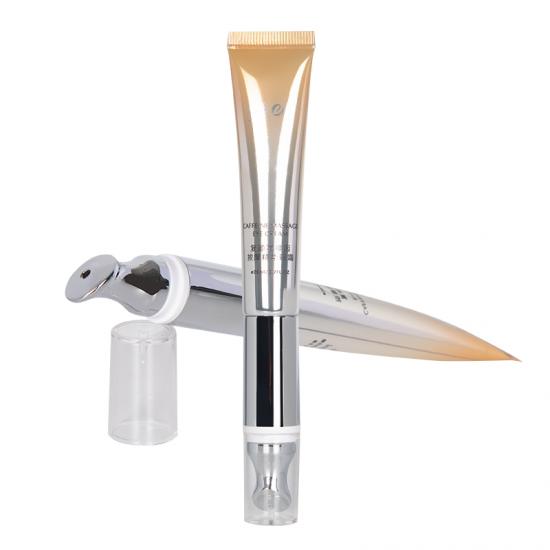
The best cosmetic tube manufacturers in China depend on the packaging format and project requirements. Buyers seeking functional massage applicators can investigate Foshan Huihong Plastic Industrial Co., Ltd.; brands needing broader packaging portfolios can compare suppliers such as HCP Packaging, Jarsking, and Lisson. These companies should not be treated as interchangeable, and this editorial shortlist is not an independently audited ranking.
Before selecting a factory, request a material specification, a formula-compatible sample, a detailed quotation, written quality standards, and confirmation of tooling ownership. Compare the total delivered cost rather than the unit price alone.
The companies below represent different areas of the Chinese cosmetic packaging market. Their order does not indicate overall quality, market share, or verified performance. Product scope, factory arrangements, certifications, and commercial terms should be confirmed directly with each supplier.
Huihong Packaging is a relevant candidate for brands developing skincare, eye-care, hair-care, and personal-care packaging. Its published product range includes PE tubes, ABL tubes, aluminum tubes, laminated tubes, airless pump tubes, and functional massage-head packaging. The company also lists sunscreen bottles, cosmetic bottles, jars, caps, and customized mold development.
Its functional applicator range may be particularly relevant to brands that want packaging to contribute to the application experience rather than simply contain a formula. For example, the 20ml vibrating eye cream tube combines a squeezable package with a zinc-alloy massage applicator. Buyers should confirm the exact operating mechanism, material specifications, customization options, and testing requirements for their project.
Best fit: Buyers evaluating custom cosmetic tubes, massage applicators, or related packaging formats from one supplier.
Guangzhou Lisson Plastic is a supplier worth investigating for brands that need to compare cosmetic containers and customized packaging options. Buyers should establish which tube structures and decoration processes are manufactured in-house and which are sourced from partner facilities.
Best fit: Projects requiring a broader supplier discussion across cosmetic packaging formats.
Boyu Packaging is another candidate for buyers comparing customized cosmetic tube solutions. When requesting a quotation, ask for available tube materials, decoration methods, mold options, and minimum order quantities for the exact model rather than relying on a general company profile.
Best fit: Brands comparing customized packaging designs and OEM production arrangements.
HCP Packaging is known in the beauty packaging sector for serving brand-oriented packaging projects. Buyers considering it should check whether the required tube format, production location, order volume, and commercial terms match their launch plan.
Best fit: Brands evaluating established beauty packaging partners for more demanding design requirements.
Jarsking is worth including when a project involves comparing tubes with other primary packaging formats, such as bottles and jars. This can be useful when a brand is developing a coordinated skincare line. Confirm the manufacturer's specific tube capabilities instead of assuming every product shown in a catalogue is made at the same facility.
Best fit: Brands comparing multiple packaging formats for a coordinated product range.
Longderm is a candidate for buyers exploring skincare packaging manufacturers in China. Before shortlisting it for a tube project, request evidence of relevant tube production, available materials, print quality, and compatibility testing procedures.
Best fit: Skincare brands comparing packaging development and customization options.
Amy Plastic Tube is a name to investigate during tube-specific supplier research. Buyers should verify its current legal entity, factory location, production scope, and export arrangements, then request a quotation based on a defined tube specification.
Best fit: Buyers building a shortlist focused specifically on cosmetic tubes.
Sanxin is a potential research candidate for buyers considering laminated tube structures. The critical question is whether the available laminate provides the barrier performance required by the intended formula and shelf-life target. Ask for the exact structure and supporting technical documentation.
Best fit: Projects where laminated construction and product protection are key evaluation criteria.
Sun-Rain can be included in a wider packaging supplier comparison, but the specific tube format and manufacturing route must be verified before it is considered a direct alternative to a tube specialist. Ask about production allocation, quality controls, and capacity during peak demand.
Best fit: Buyers comparing manufacturing arrangements and supply continuity.
EFA Packaging is another name for initial supplier research. Confirm whether its current capabilities cover your exact cosmetic tube construction, applicator, decoration, and order volume. A product catalogue alone is not sufficient proof of manufacturing capability.
Best fit: Buyers expanding a shortlist of potential customized packaging suppliers.
Company size and catalogue breadth are useful starting points, but the packaging specification should drive the final comparison. A standard PE tube for hand cream has different technical requirements from a laminated tube for a formula sensitive to oxygen or a tube fitted with a metal massage head.
| Evaluation factor | What to request | Why it matters |
|---|---|---|
| Material and structure | Material grade, layer structure, wall thickness, and component list | Helps assess compatibility, protection, and durability |
| Decoration | Printing method, color standard, artwork tolerances, and approved sample | Reduces color variation and branding defects |
| Closure performance | Leak testing, cap fit, opening and closing performance | Helps prevent leakage during transport and use |
| Customization | Mold cost, ownership terms, revisions, and exclusivity | Clarifies upfront cost and future sourcing flexibility |
| Production control | Inspection plan, defect limits, traceability, and corrective-action process | Supports repeatable quality at commercial volumes |
| Commercial terms | MOQ, lead time, payment terms, shipping basis, and replacement policy | Makes quotations comparable on a total-cost basis |
Material selection should begin with the formula, not the desired appearance. PE tubes are widely used for everyday skincare products because they are flexible and convenient to dispense. ABL and other laminated structures may be considered when additional barrier or decoration requirements apply. Aluminum tubes can suit selected formulas and brand concepts, but their compatibility, folding behavior, and filling requirements must be checked for the specific application.
There is no universal shelf-life guarantee attached to a material name. Formula ingredients, processing conditions, package geometry, closure design, storage temperature, and light exposure all affect performance. Ask the supplier to recommend a structure against written product requirements, then validate the complete package with the actual formula.
Consider a beauty brand preparing to launch a 20ml eye cream with a massage applicator. The purchasing team has two options: a conventional tube with a standard cap or a customized tube with a functional metal applicator.
The second option may create a more distinctive user experience, but it introduces additional questions. Does the applicator dispense the cream consistently? Can the package be filled on the existing production line? Will the metal component remain secure during transport? Can the complete assembly be cleaned or protected according to the product's intended use? What happens if a component becomes unavailable?
Huihong's published 20ml vibrating eye cream tube is an example of the type of functional format buyers can assess during this process. Its listing provides a concrete starting point for sample evaluation, not proof that the product is suitable for every formula or filling line. A sensible approval process includes a filled sample, transport simulation where appropriate, repeated dispensing checks, and documented acceptance criteria before mass production.
Start with suppliers whose demonstrated production capabilities match your tube format. Compare samples, material specifications, quality systems, customization terms, and repeat-order performance. Do not rely on rankings alone.
Not necessarily. Tooling, printing setup, quality inspection, freight, import duties, rejected units, and inventory costs can change the final cost substantially. Compare the landed cost per accepted unit.
Ask whether it manufactures the required structure in-house, what testing it performs, what its MOQ and lead time are for your exact design, and how it manages defects and repeat orders.
Depending on the agreement, an OEM partner may produce packaging to your design or specifications and support material selection, tooling, decoration, sampling, and mass production. Define responsibilities and ownership in writing.
There is no universal number. The sample plan should cover relevant production variation, formula compatibility, dispensing, closure integrity, and transport risks. Agree on the test method and pass criteria before approval.
The strongest supplier choice is the one that can demonstrate a suitable technical solution, document its manufacturing controls, and deliver consistent packaging under agreed commercial terms. Use the shortlist as a starting point, verify each candidate directly, and approve the complete package—not just its appearance—before committing to a large order.
 サポートされているIPv6ネットワーク


 オンラインサービス
Wechatへスキャンします :

 日本語
日本語 English
 français
 русский
 español
 português
 العربية
 한국의
한국의 ไทย
ไทย Tiếng Việt